

Making Active Places: reflections from Active Travel England’s conference
There was something fitting about hearing Heidi Alexander, Secretary of State for Transport, open Active Travel England’s Making Active Places conference with her own reflections on cycling as a child, and then, at the end of the conference, hearing from a group of inspirational young people about “Shaping What’s Next.”
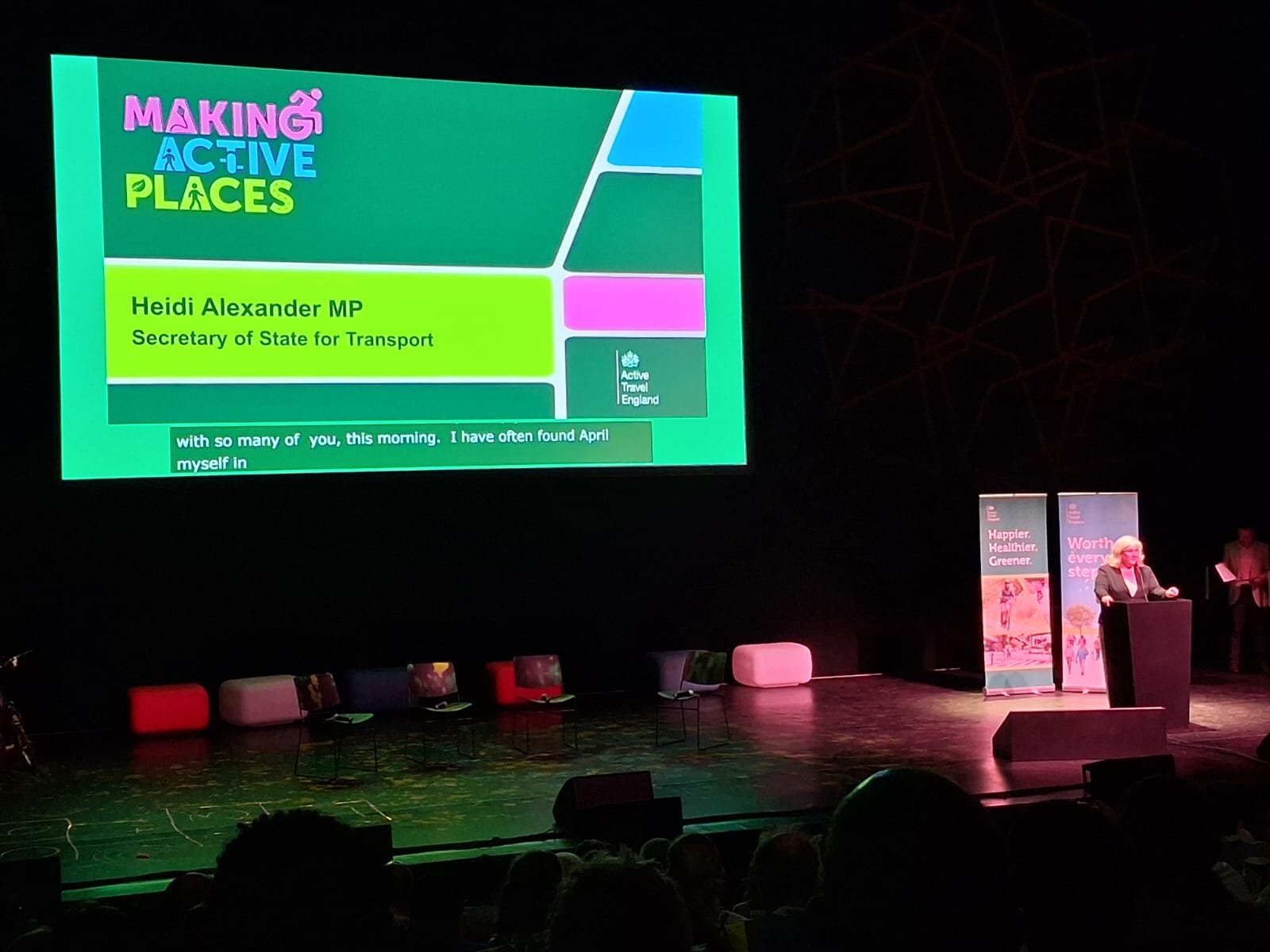
Heidi Alexander MP
The two sessions felt like natural bookends to two busy days, focused on the places we are creating now and the people who will use and inherit them. Change in our built environment rarely happens quickly, so much of what we do today will ultimately be experienced by a younger generation.
That was one of my biggest takeaways from the conference. Creating better places isn't simply about getting more people to walk or cycle; it is about making sure people can move around their communities safely and independently by the most appropriate means.
Starting with people
In her opening keynote, Heidi Alexander talked about walking, wheeling and cycling as essential parts of everyday journeys, the walk to the bus stop, wheeling along the high street, or cycling to work, school or the shops.
That felt like a useful starting point. At Bike Worcester, our focus is on making cycling safer and easier across Worcester, but the discussions over the two days reinforced that cycling doesn't sit in isolation. A cycle route connects to the pavement, the crossing, the junction, the school, the high street and all the other things that make up the places in which we live.
There is also a clear ambition behind the Government's approach. A target has been set for 60% of children aged 5–16 to usually walk or cycle to school by 2035, while the conference was used to announce £104 million of funding for the National Cycle Network.
The target for children particularly stood out to me. Getting more children walking and cycling isn't just about the journey to school. It is about what we are teaching young people is normal behaviour to get around every day and independence: being able to see friends, get to activities and explore their communities without always needing an adult to drive them.
Listening to young people
That theme returned in the closing session, Shaping What’s Next, where young people talked about how they experience public spaces and active travel.
Hearing directly from them was a useful reminder that the people designing places don't necessarily experience them in the same way as the people who use them. One thing that stayed with me was the importance of involving young people earlier and more meaningfully. If change takes years to plan and deliver, decisions being made now could affect them throughout their childhood and well into adulthood.
Walking, cycling and wheeling can all play a role in helping young people become more independent. Listening to the young people at the conference made that feel less like an abstract benefit and more like something that affects their everyday lives.
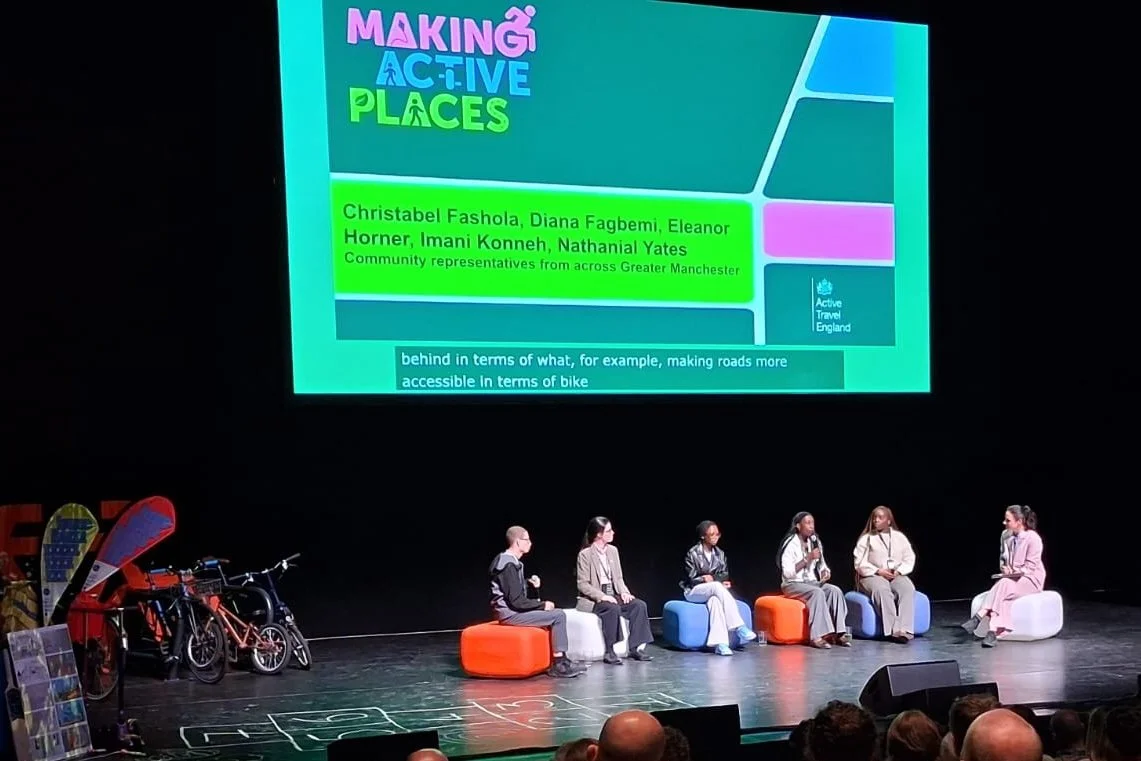
Youth community representatives from across Manchester
What about women and girls?
A common theme was the barriers women and girls experience when using public spaces and walking, wheeling and cycling.
The issue isn't simply whether there is a footway or cycle route. Technical points such as lighting, overlooking, traffic speeds, crossings, and the way different parts of a street interact are important, but they don’t determine whether someone feels comfortable using a space.
Infrastructure only works if people feel able to use it. For women and girls in particular, the design of public spaces can influence whether they feel comfortable travelling independently or spending time in a particular place. Thinking about those experiences alongside the physical infrastructure gives us a better understanding of what an inclusive place needs to look and feel like.
Policy and investment
There was also plenty to take away from the changing policy landscape.
The updated National Planning Policy Framework (NPPF) is embedding active travel, as well as the safety of women and girls, more firmly within planning and decision-making. New Active Travel England guidance is looking specifically at the challenges and opportunities in rural areas, while Manchester's Streets for All guidance provided a real example of how designing streets around people is working and underway.
For anyone interested in improving cycling locally, these changes are particularly relevant. Planning decisions can influence how easy it is to walk, wheel or cycle, where crossings are placed and how developments connect to surrounding communities. Whether cycling is considered from the outset or added later can make a significant difference to the experience of a place.
There was also an important reminder that investment in active travel infrastructure isn't simply an expense. The 2025 CIHT report, Overcoming the Barriers to Implementing Active Travel Schemes, found that active travel infrastructure can deliver £5.62 in financial returns for every £1 invested. The benefits extend beyond transport, including health, local economies and retail spending.
Perhaps it isn't really about “active travel”
One of the things that kept coming back throughout the conference was whether we sometimes make the subject more complicated than it needs to be by separating out “active travel” from everything else.
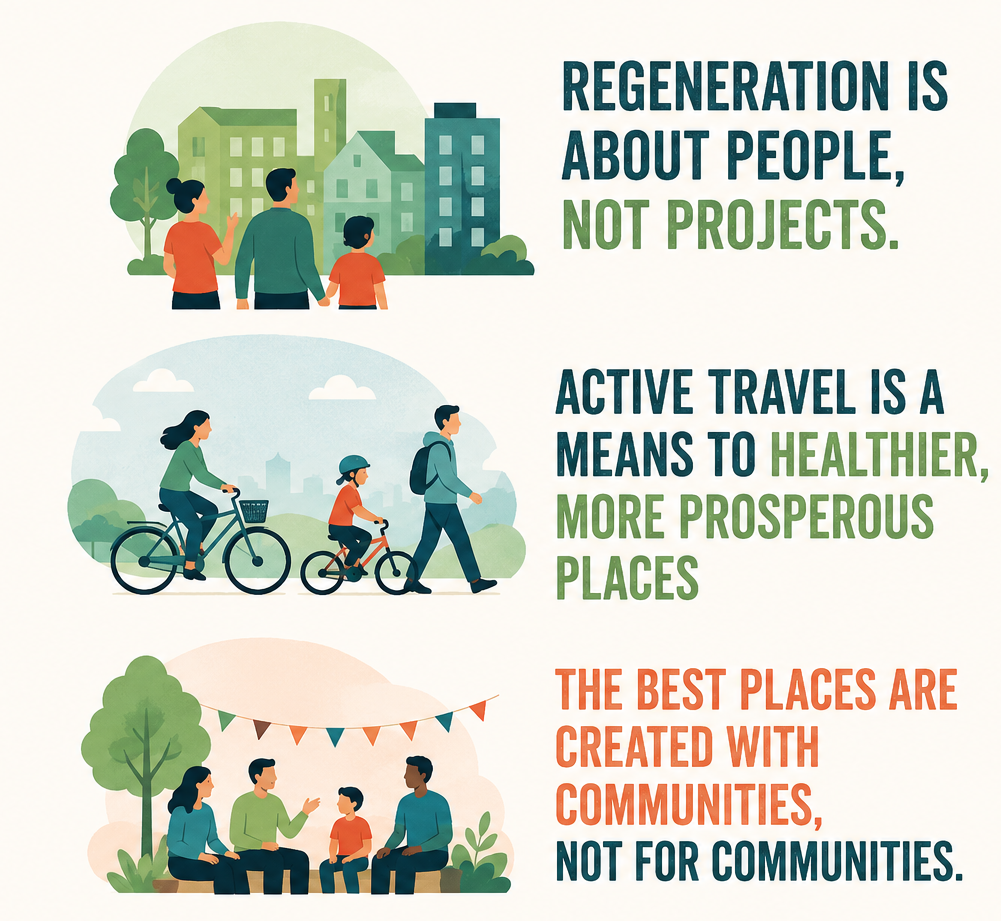
Perhaps the better starting point is simply the place itself. How do people currently move around it? Where do they need to go? What makes those journeys difficult? What would make them safer and easier?
Many streets and neighbourhoods have been designed around the car, often making driving the easiest option even for relatively short journeys, or other options just too difficult. Changing that balance isn't straightforward: road space is limited, existing development constrains what can be done, and established streets will always involve different views and priorities.
What the conference provided was a lot of examples of real places where a different approach is working, evidence about the benefits of investment and a useful reminder that decisions about movement are also decisions about the kind of places we create.
Making active places
Making active places is about understanding how people experience a place and considering what the street, the public space and the surrounding infrastructure need to provide.
For Bike Worcester, that reinforces why making cycling safer and easier across Worcester matters. Good cycling infrastructure connects people to schools, shops, workplaces, public transport and the places where communities meet. It becomes part of the fabric of a place rather than an addition to it.
And perhaps that is why the opening and closing sessions stayed with me most.
Heidi Alexander began by reflecting on what cycling meant to her as a child. Two days later, young people were talking about how they experience public spaces and what they want from the places they will grow up in.
The places we create today will shape the experiences of the next generation. Listening to them gives us a chance to understand what those places need to become.
For me, that is what Making Active Places was ultimately about: creating places where people can move around safely and independently, and where walking, wheeling and cycling are a normal part of everyday life.
