

Cycling Towards a Healthier Community
Our guest authors - Karinne Aiello, Anabelle Clemence, Maria Fragione, Graeme Johnston, and Eric Tomaino - are a student-led research team from Worcester Polytechnic Institute in Massachusetts, USA. Over two months in Spring 2026, they worked with Bike Worcester volunteer Fleur Visser to study Worcester Bike Buses and promote active travel to school.
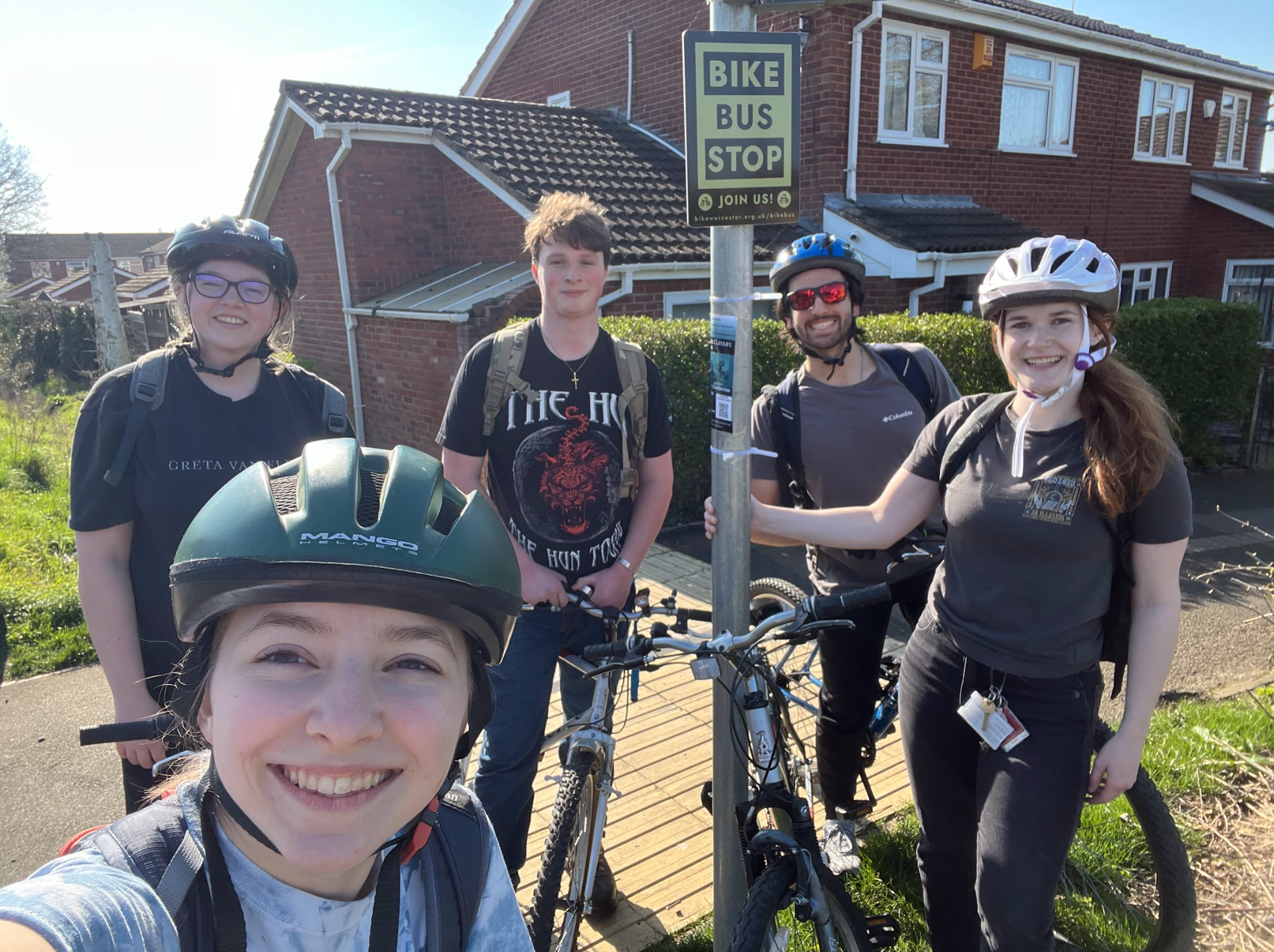
Student-research team at a Bike Bus Stop
How did you get to primary school when you were a kid?
Today, some students in Worcester are cycling to school on Bike Buses. These Bike Buses are group rides to school that provide a fun, healthy, and safe alternative transportation method. They occur once a week and are led by parents at each of the 11 participating primary schools. Bike Worcester supports these parents by providing volunteers who help block traffic and ensure the students are safe.
While Bike Buses are a great way to get to school, not all Bike Buses are well attended. Therefore, the goal of our project was to grow the Bike Bus community and foster more cycling in Worcester. To support our research, we identified factors affecting attendance and the program’s influence on participants—including children, parents, and volunteers. We accomplished this through surveys, interviews, focus groups, and the most fun method, direct observation.
While in Worcester, we rode on all 11 Bike Buses around the city. We got to experience the community spirit through listening to music on the ride, handing out children-designed Bike Bus stickers, and even meeting the infamous Bike Bus dog, Kiki! As opposed to cycling alone or driving, Bike Buses provided a social environment for all participants. The children were excited to go to school, with some saying Bike Bus days were their favorite of the week. We observed that Bike Buses were a great way to exercise, spend time outdoors, and start the day. This sentiment was supported by responses from our parent survey and volunteer focus group.
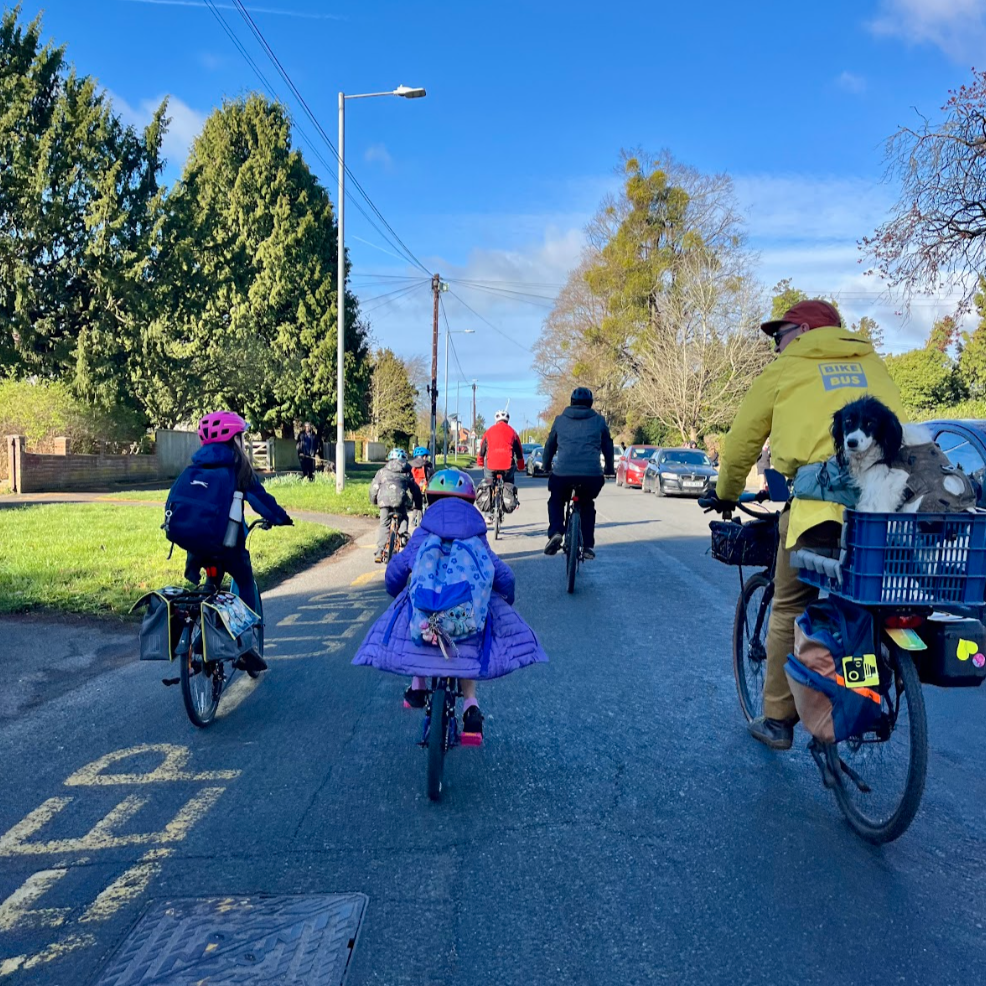
Nunnery Wood Bike Bus
The key findings from our research are as follows:
Parents’ morning schedules and distance were the main barriers to joining a Bike Bus.
Both participating and non-participating parents identified traffic concerns as a challenge.
The highest reported benefits on participating children include improved wellbeing, social connections, and energy levels.
Our lack of data from schools reinforced that they are not involved, but participation could increase if schools assist in program growth.
Based on our findings, we created a list of recommendations for Bike Worcester. Our recommendations include:
Distributing a six-page guidebook our team designed to promote Bike Buses
Developing a WhatsApp channel for parent leads
Incorporating additional routes
Promoting at the school gates
Increasing school bike storage
Hosting test rides for non-participating families
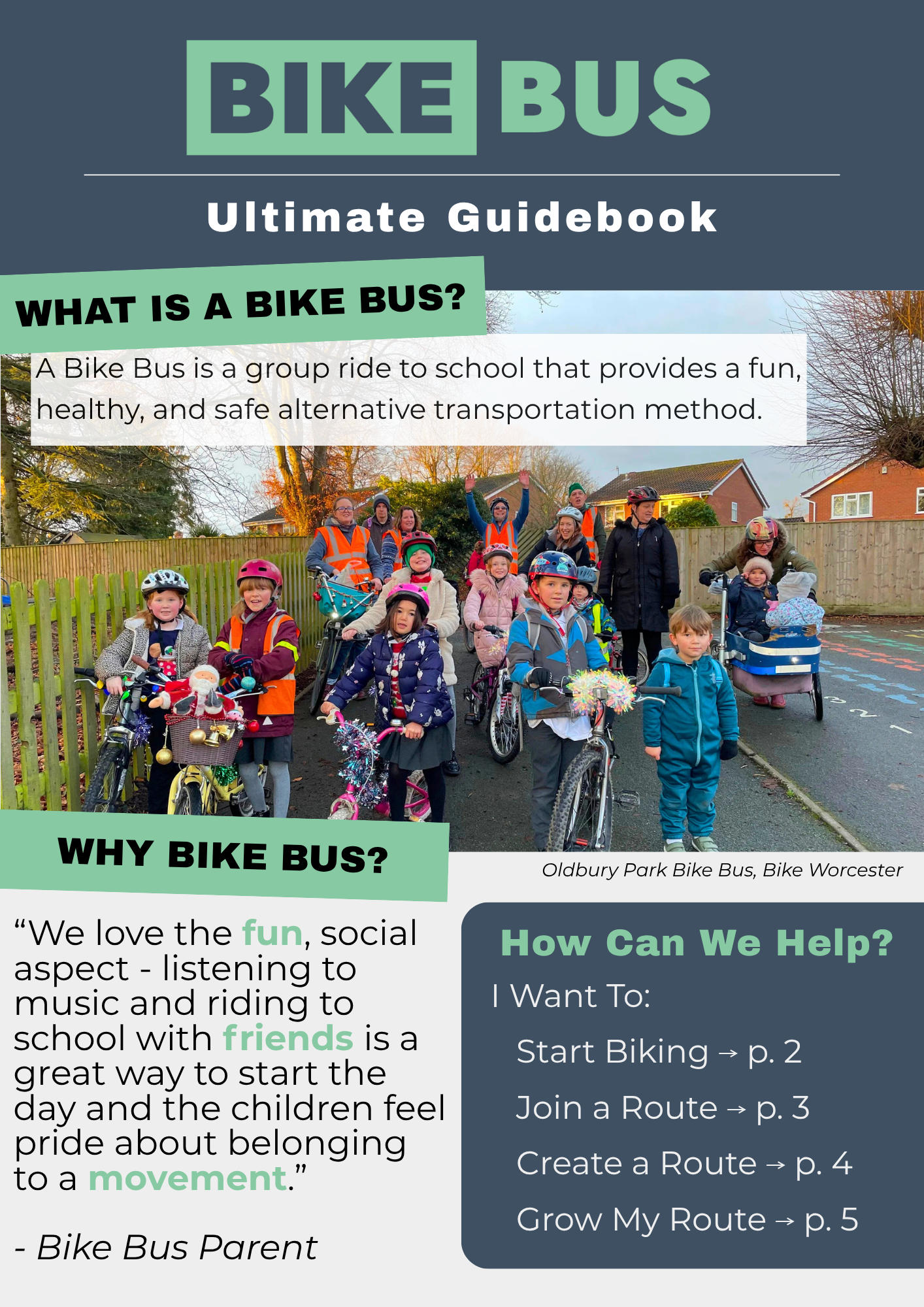
To learn more about this exciting program, check out our Bike Bus Guidebook!
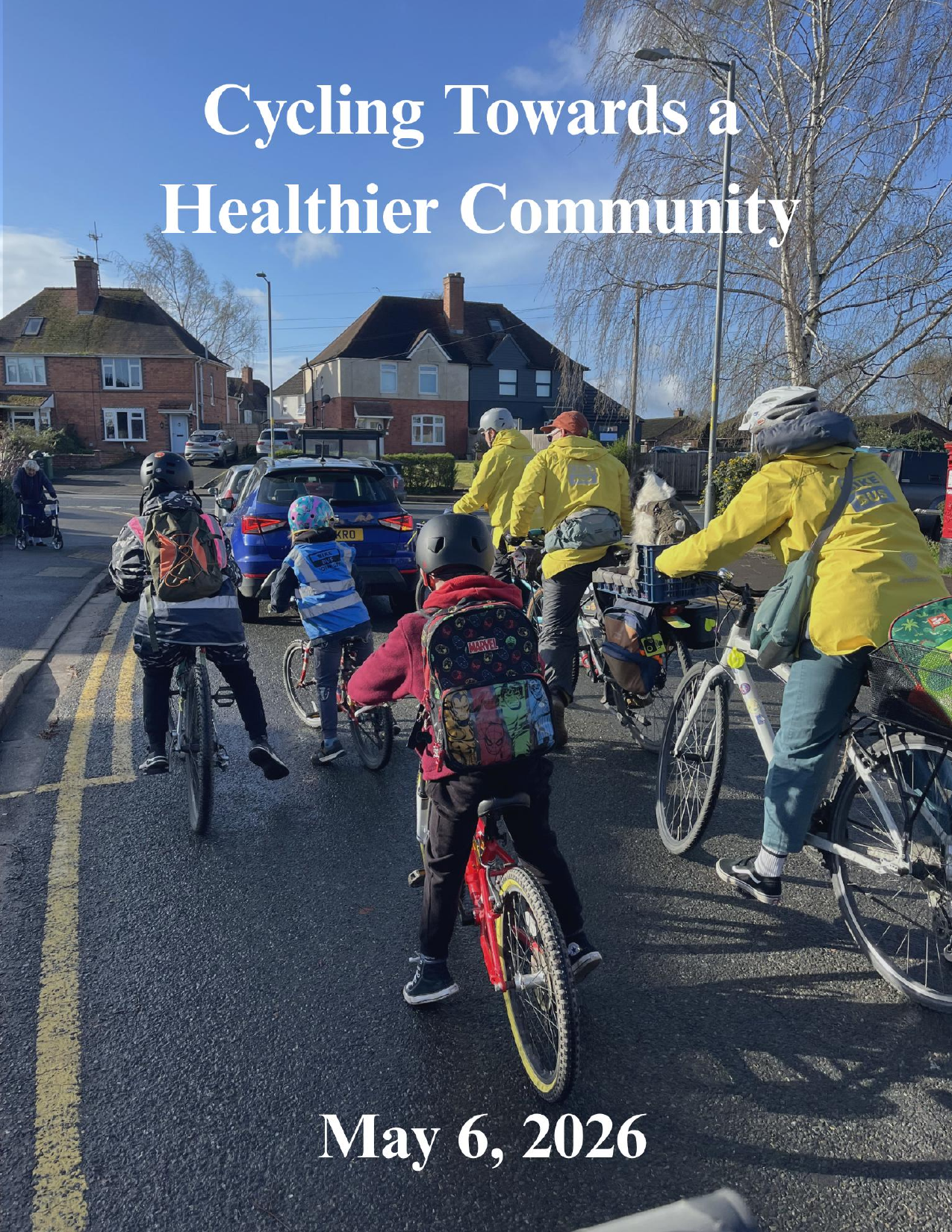
To view our full report, click here.
And finally, watch our presentation below: