Some bits of the Highway Code I’m not sure all road users are aware of
I spend a fair amount of my time mooching about on our roads, you know, going places (literally not metaphorically), like I’m guessing lots of other people do. Sometimes this is in a car or van, sometimes by foot (often walking with my friend the adorable Olive) and sometimes on two wheels; my preferred method of transport for most of my journeys in and around Worcester.

The adorable Olive
Travelling at different speeds for different journeys coupled with being interested in how people are moving around offers lots of opportunities for making lots of observations about our collective behaviours when we’re using the roads. I mention this because the flipperoo of this is if you’re largely only using a single mode of transport you’ll be missing out on watching all sorts of shenanigans that are commonplace.
The Highway Code is our goto guide for everyone getting around, providing an accessible and layperson’s guide to the laws that govern the use of our roads. Billed as ‘essential reading for all road users’, it was first published in 1931, 4 years before a Mr J Beene was the first person to pass a driving test. Everyone with a UK driving license has had to answer questions about the Highway Code during their driving test, or sit a theory test (introduced in 1996); you can test your knowledge here.
The Road Traffic Act 1988 requires all road users to comply with the laws relating to road use, and given these laws are reflected in the book (also available online) it seems reasonable to suggest we’re all obliged to keep abreast of the Highway Code, including when it’s updated (which happens regularly; there’s been over 20 updates in the last 10 years). The Highway Code currently consists of an introductory section, 307 rules (which include references to the relevant laws), sections on signals, signs, road markings and vehicle markings, 8 annexes, and a section on other information.
I know right. At this stage I think it’s OK to acknowledge we probably all need to refresh our knowledge; so here’s the link to the online version (which is excellent).
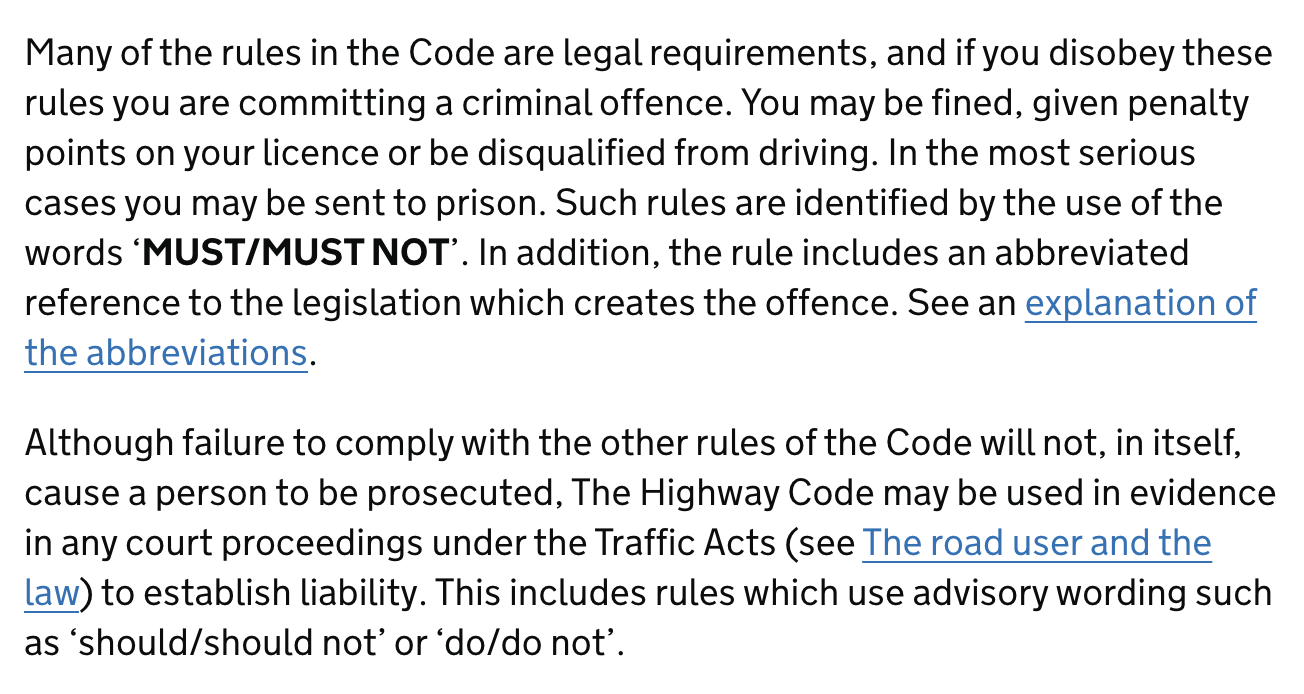
The instructions in the Highway Code are usually prefixed with either SHOULD / SHOULD NOT or MUST / MUST NOT which provides another level of consideration when understanding the rules. Regardless of this it’s a reasonable expectation that if you comply with all of the rules in the Highway Code then you’ll be complying with the law. See extract below:
‘So comply with the Highway Code, avoid penalty points and fines. Got it.’
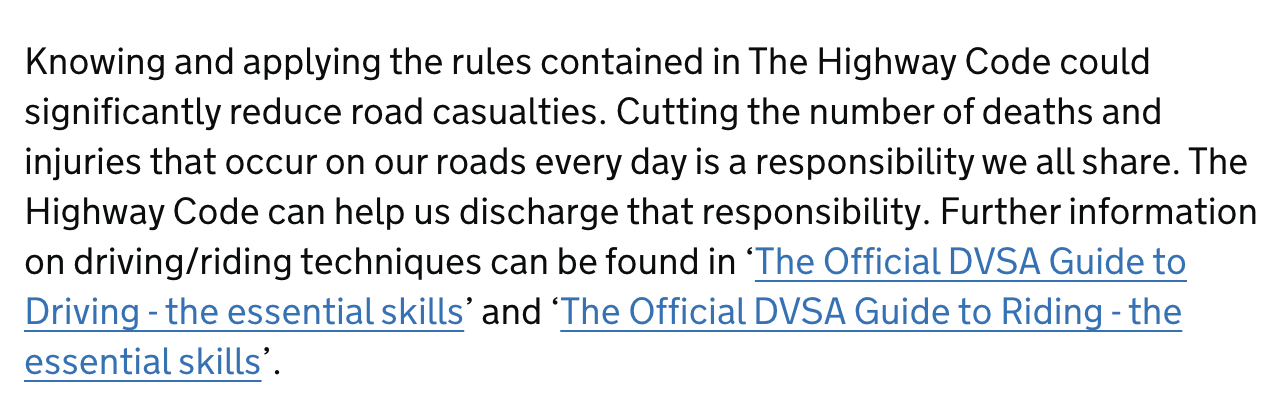
But that’s not really what it’s about. There’s another section in the introduction which states clearly what adherence to the Highway Code is trying to achieve; a significant reduction in road casualties, and cutting the number of deaths and injuries that occur on our roads every day (historic Road Traffic Collision (RTC) data for Worcester can be found here; and our blog with a rolling total of RTCs in Worcester for 2025 is here).
Right, that’s the introduction done (longer than I was planning but c’est la vie) so I’m now going to point out a few bits and pieces which I reckon regular folks are unaware feature in the Highway Code; honestly, it’s only that I’ve looked them up that I’m aware. Maybe this corner of the blogiverse can help ripple a bit of road user education around the Faithful City and beyond.
Hierarchy of Road Users
This was a notable change to the Highway Code made in January 2022 and provided clarity of the expectation that drivers of larger, faster vehicles have a responsibility to ensure the safety of more vulnerable road users. You can’t miss it; Rules H1 to H3 are the first rules after the introduction in the Highway Code.
The Code states ‘The ‘hierarchy of road users’ is a concept that places those road users most at risk in the event of a collision at the top of the hierarchy. The hierarchy does not remove the need for everyone to behave responsibly. The road users most likely to be injured in the event of a collision are pedestrians, cyclists, horse riders and motorcyclists, with children, older adults and disabled people being more at risk.’
Rule H1 states ‘Everyone suffers when road collisions occur, whether they are physically injured or not. But those in charge of vehicles that can cause the greatest harm in the event of a collision bear the greatest responsibility to take care and reduce the danger they pose to others. This principle applies most strongly to drivers of large goods and passenger vehicles, vans/minibuses, cars/taxis and motorcycles.’
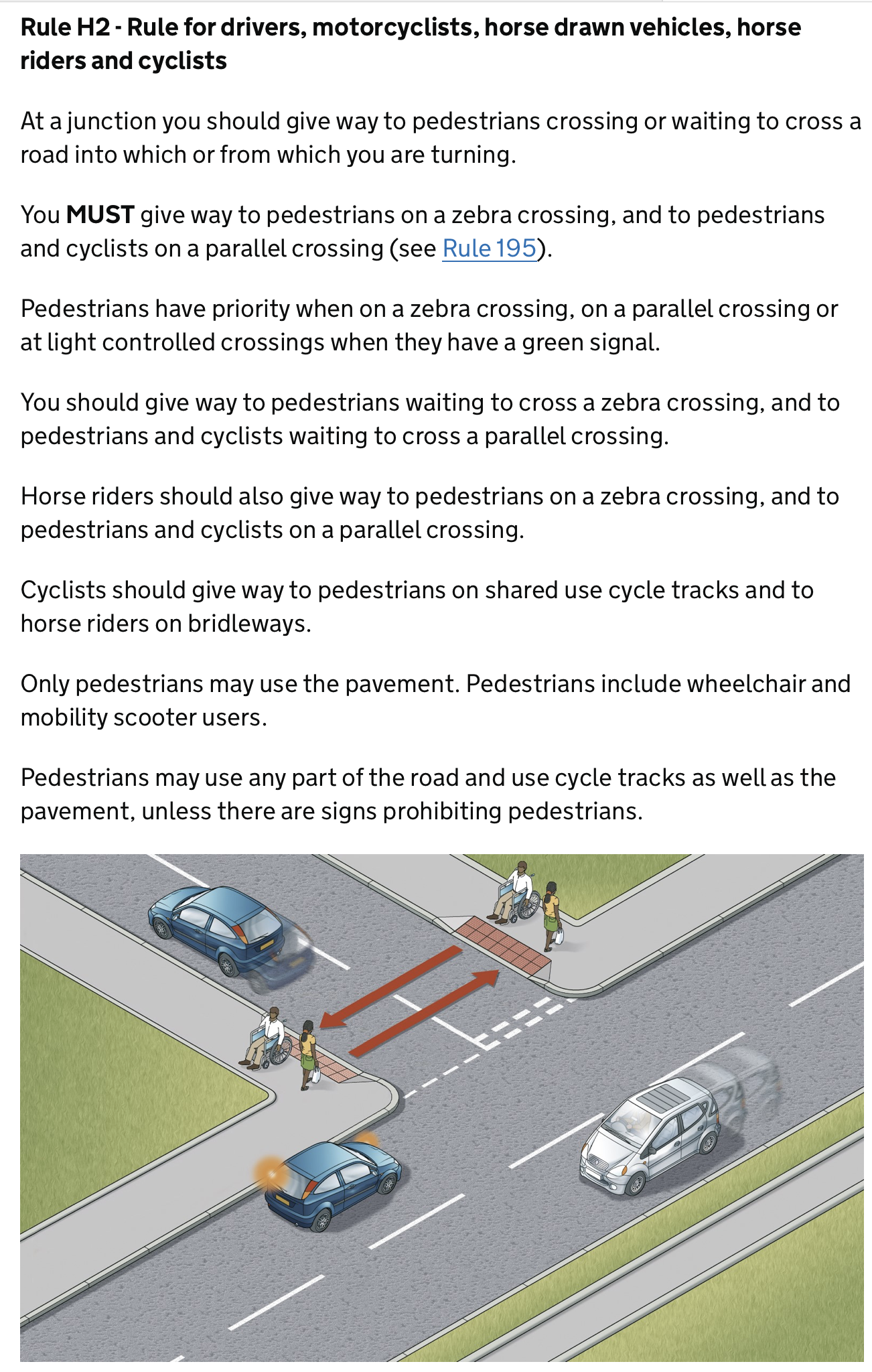
Rule H2 provides details that all road users should give way to pedestrians crossing or wating to cross at junctions. My personal experience (as a pedestrian) is that the vast majority of drivers are either unaware of this part of the Highway Code, or chose to ignore it. Worse than that, my experience when riding my bike and giving way to pedestrians also provides an opportunity for drivers to get busy on their horn, presumably implying I’m doing something wrong.
Advanced Stop Line (ASL)
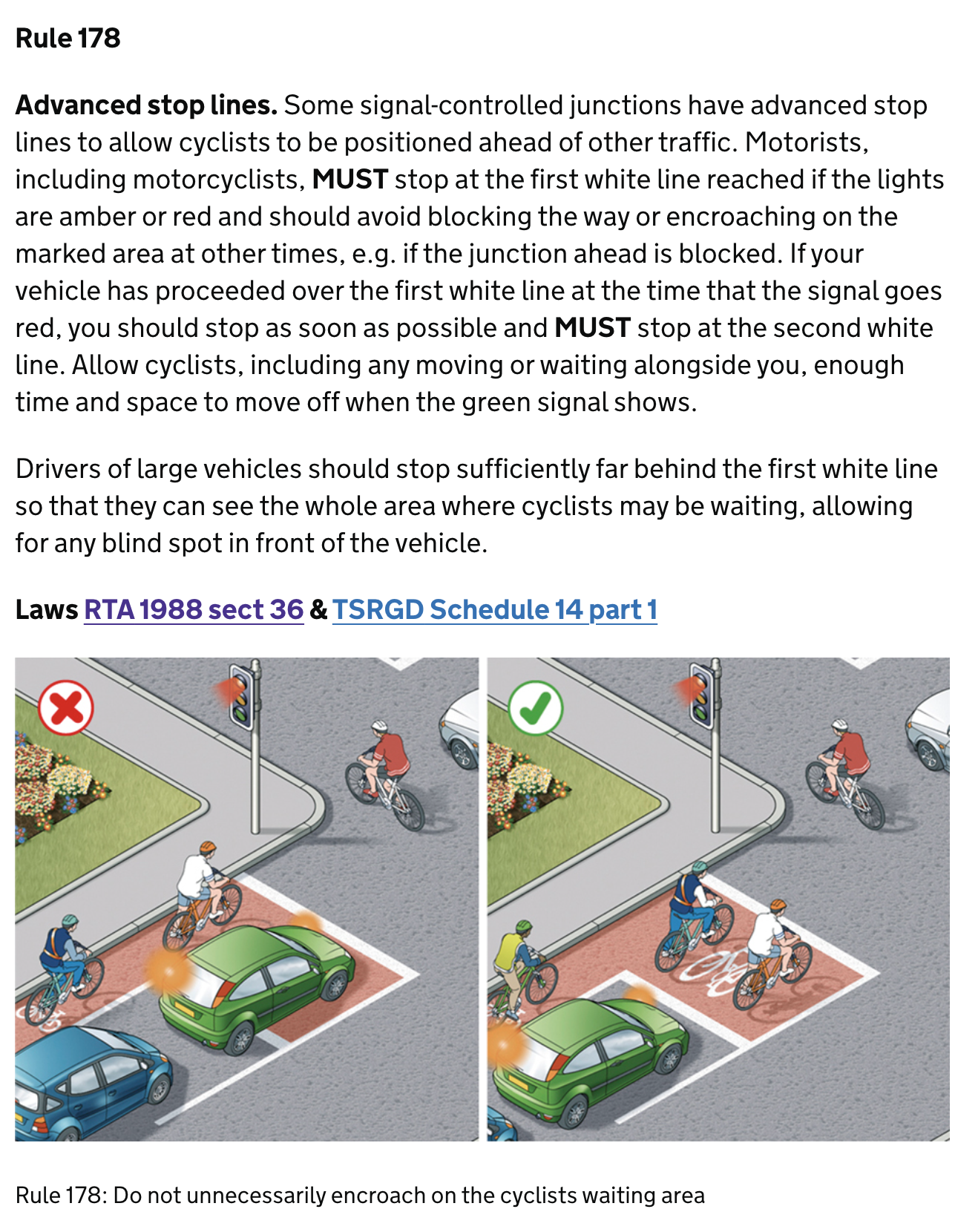
So these are the spaces at traffic lights with a bike painted in them, and are designed to allow people riding bikes to filter through traffic and be in a visible position at the front of traffic, allowing them to move off ahead of larger vehicles, and reducing the risk of RTCs at the junction. The Highway Code treats this as a MUST NOT in Rule 178, so if you’ve crossed the first solid white line you’re breaking Section 36 of the Road Traffic Act 1988.
Idling
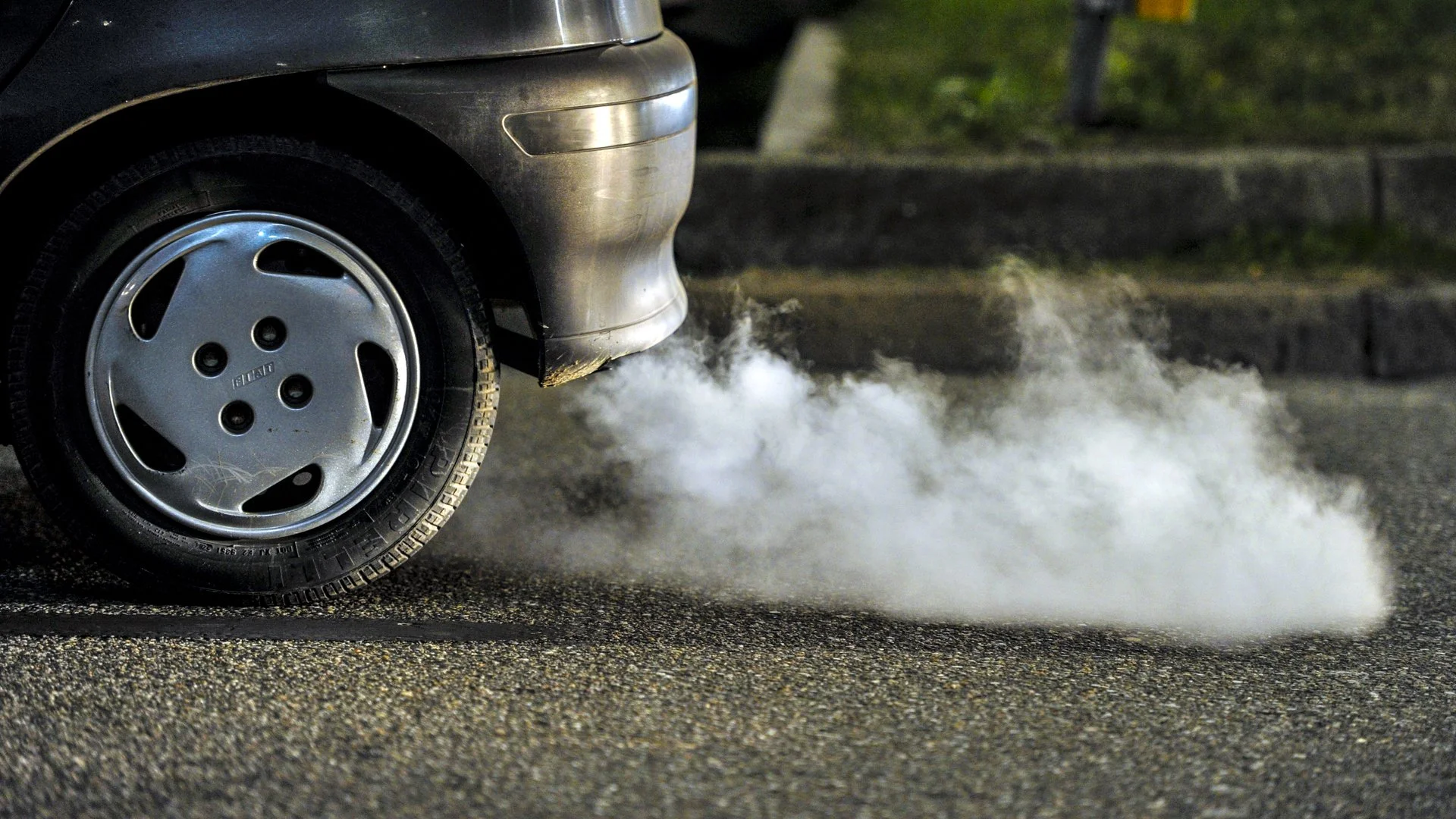
Next one is idling. I tend to spot this more when I’m walking, and on occasion have tapped on a window and asked the driver to turn off the engine; usually when the street stinks of fumes. Does the Highway Code say anything about idling, aka sitting in the car with the engine running?
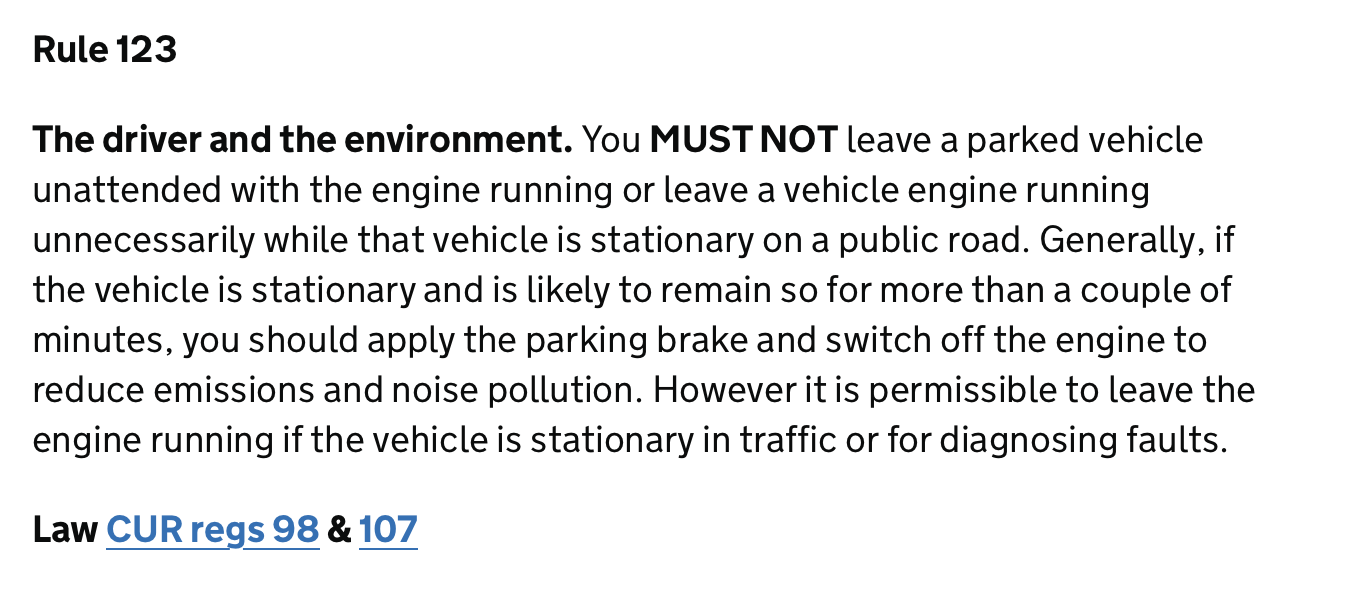
Yes it does. Rule 123 says this:
The RAC have an article on idling from earlier this year, where it states drivers can be subjected to a £20 Fixed Penalty Notice for refusing to turn off their vehicle if asked to by an official. Pretty paltry affair given the article also states ‘The Royal College of Physicians estimate 40,000 deaths a year in the UK are linked to air pollution, with emissions from engine idling contributing to this.’
Anyway, sat in your vehicle with the engine running? You’re breaking the law, The Road Vehicles (Construction and Use) Regulations 1986, regulation 98.

Littering
Rob and I cycled to Spain last summer, and one of the notable differences between the roads in England compared to France and Spain was the amount of litter. Honestly, hundreds of miles on the continent and an obvious difference, both on urban and rural roads. Now clearly this could be a different in how litter is collected, but does the Highway Code say owt about the antisocial act of dropping litter?
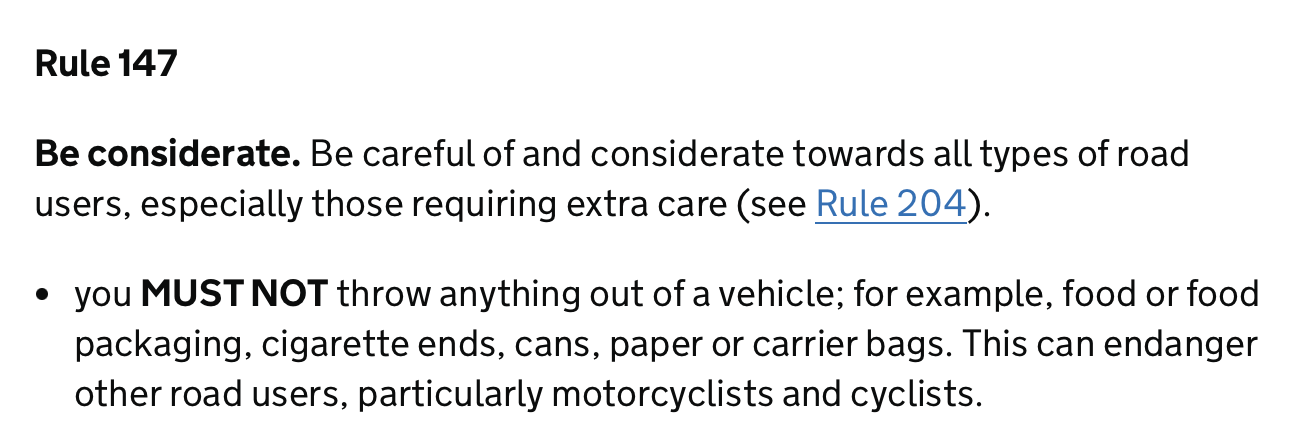
In short, yes; Rule 147 is explicit, and is covered by the Environmental Protection Act 1990, Section 87 (provisions relating to litter). Sure, lots of litter will be dropped by people not driving cars, but have a look at the verges on rural roads, dual carriageways and motorways (including slip roads and roundabouts), and ask yourself how all the litter gets there. Added to this it’s estimated to kill 3 million animals a year.
Rule 147 also has some other interesting points, again which often appears to be forgotten by certain drivers, particularly when they might consider themselves inconvenienced by other road users:
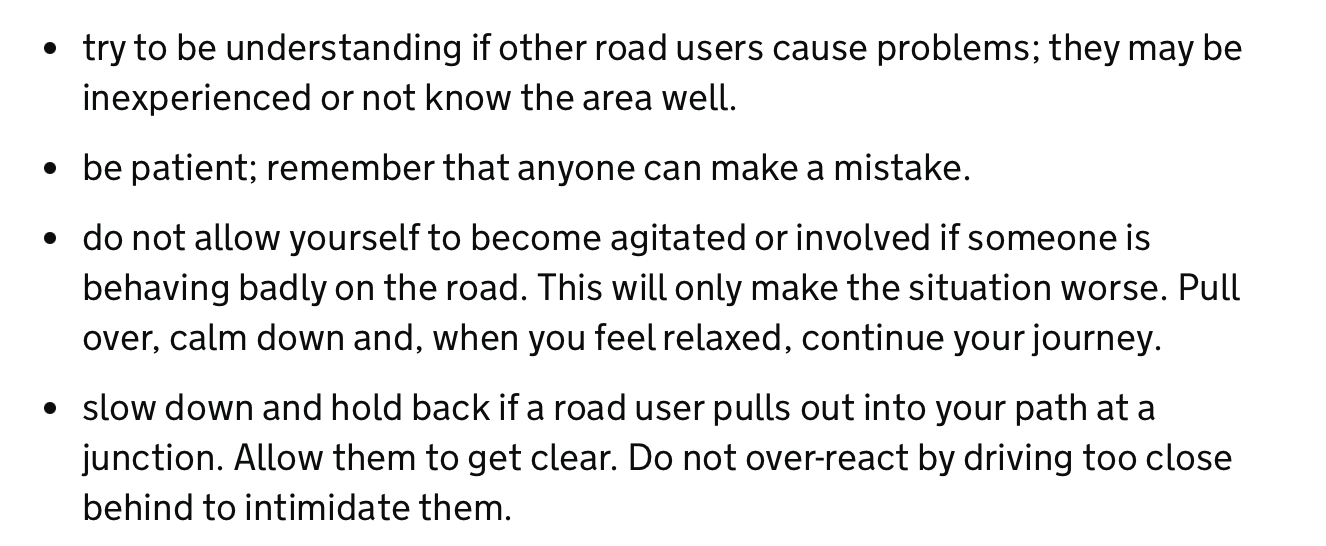

So in short, be patient, stay calm, don’t intimidate other road users. And if you feel like you’re losing control you need to stop and chill out. Entirely sensible, and there in black and white.
Summary
So there you go. A quick run down of bits of the Highway Code I’m not sure those of us who drive are fully up to speed with. Not covered here (maybe there’s a part two) is 2 of the Fatal 4, mobile phone use and speeding. It's probably also worth pointing out some of the stuff the Highway Code says about folk riding bikes; another time.
Anyway, comments are open, let me know your thoughts.