What does the Highway Code say about overtaking people riding bikes?
The Highway Code is our goto guide for everyone getting around, providing an accessible and layperson’s guide to the laws that govern the use of our roads. Billed as ‘essential reading for all road users’, it was first published in 1931, 4 years before a Mr J Beene was the first person to pass a driving test. Everyone with a UK driving license has had to answer questions about the Highway Code during their driving test, or sit a theory test (introduced in 1996); you can test your knowledge here.
The Road Traffic Act 1988 requires all road users to comply with the laws relating to road use, and given these laws are reflected in the book (also available online) it seems reasonable to suggest we’re all obliged to keep abreast of the Highway Code, including when it’s updated (which happens regularly; there’s been over 20 updates in the last 10 years). The Highway Code currently consists of an introductory section, 307 rules (which include references to the relevant laws), sections on signals, signs, road markings and vehicle markings, 8 annexes, and a section on other information.
I know right. At this stage I think it’s OK to acknowledge we probably all need to refresh our knowledge; so here’s the link to the online version (which is excellent).
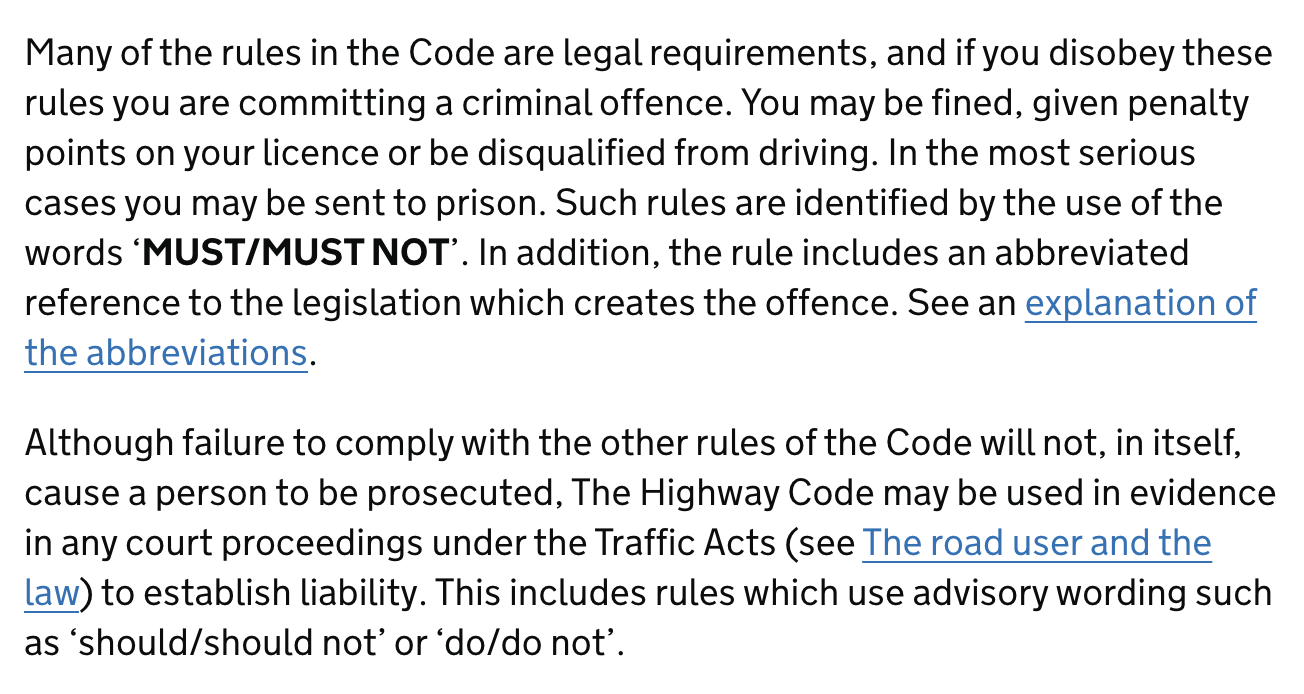
The instructions in the Highway Code are usually prefixed with either SHOULD / SHOULD NOT or MUST / MUST NOT which provides another level of consideration when understanding the rules. Regardless of this it’s a reasonable expectation that if you comply with all of the rules in the Highway Code then you’ll be complying with the law. See extract below:
‘So comply with the Highway Code, avoid penalty points and fines. Got it.’
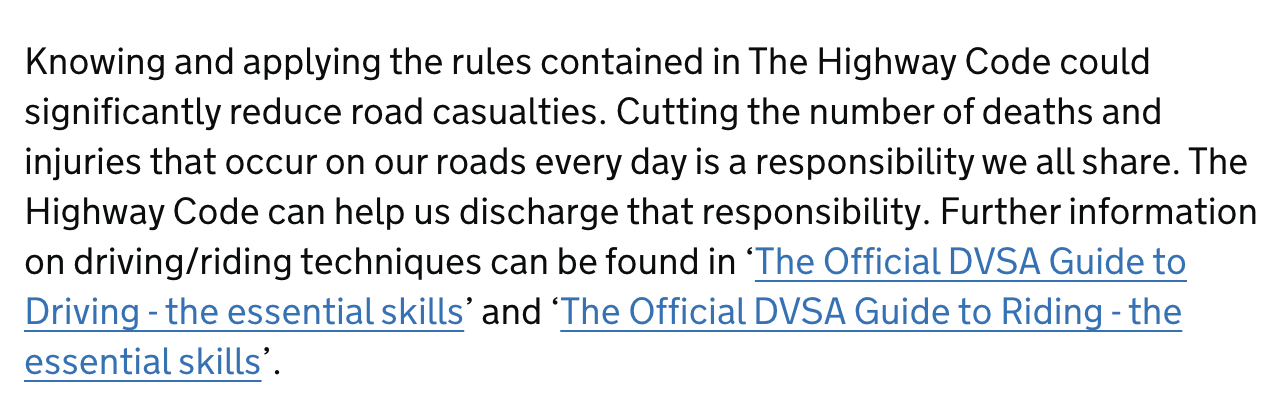
But that’s not really what it’s about. There’s another section in the introduction which states clearly what adherence to the Highway Code is trying to achieve; a significant reduction in road casualties, and cutting the number of deaths and injuries that occur on our roads every day (historic Road Traffic Collision (RTC) data for Worcester can be found here; and our blog with a rolling total of RTCs in Worcester for 2025 is here).
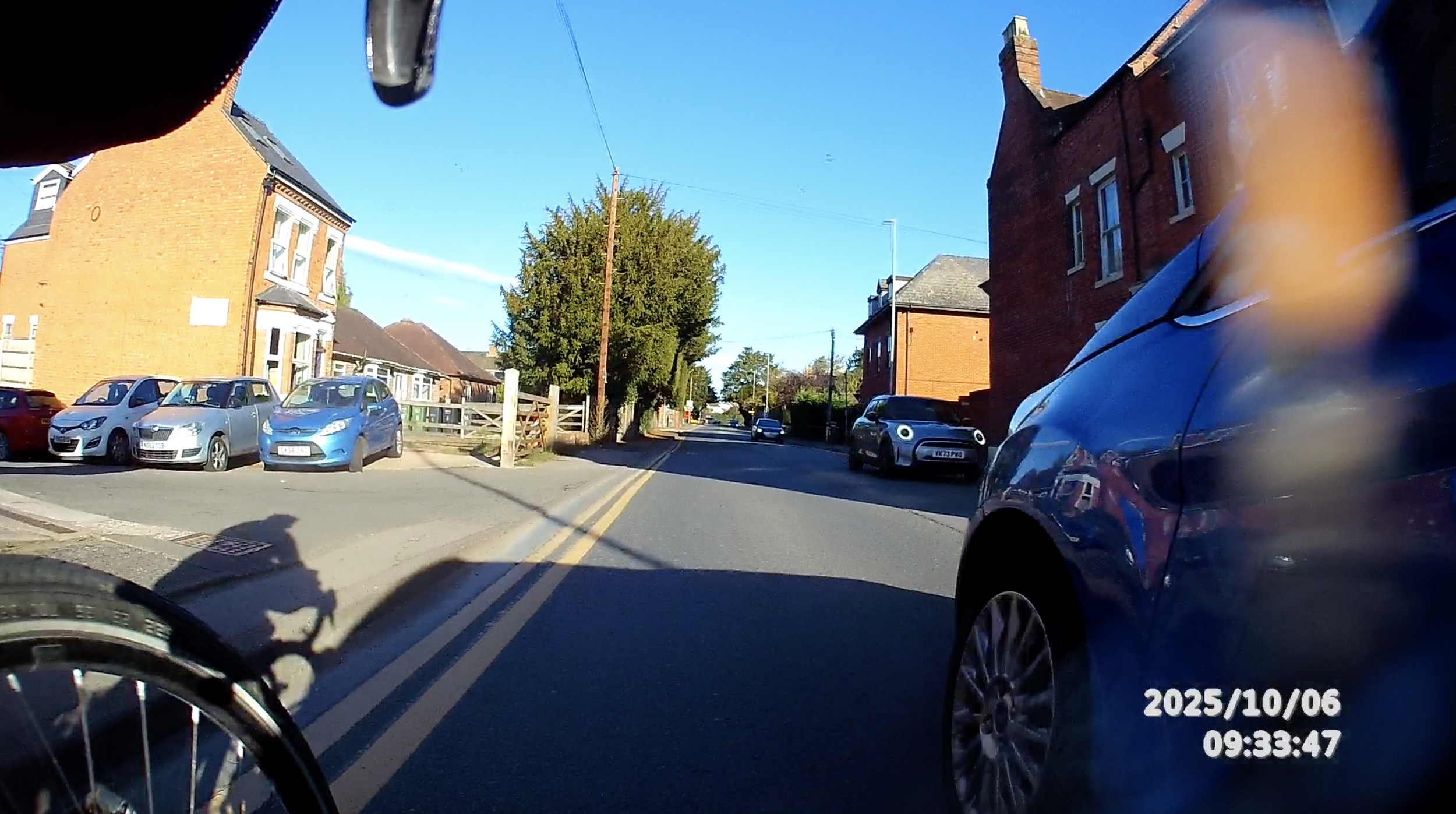
Close passing a cyclist
As irritating as it is watching people driving cars ignore laws that are only in place to keep themselves and other road users safe, the driver activity that affects me personally almost every day when riding my bike is drivers not leaving enough space when overtaking when I’m riding my bike (usually to work). I’ve reported a LOT of drivers to West Mercia (and other forces) for this, and have attending court as witness on three occasions. Collectively Bike Worcester have reported over 1000 drivers where West Mercia have issued either a warning / advice letter or a Notice of Intended Prosecution.
So what does the Highway Code say about overtaking someone riding a bike? There are lots of rules that apply, summarised below (I’ve left out some of the bullet points that don’t apply).
Rule 162 states: Before overtaking you should make sure
the road is sufficiently clear ahead
road users are not beginning to overtake you
there is a suitable gap in front of the road user you plan to overtake
Rule 163 states: Overtake only when it is safe and legal to do so. You should:
not get too close to the vehicle you intend to overtake
give motorcyclists, cyclists and horse riders and horse drawn vehicles at least as much room as you would when overtaking a car (see Rules 211 to 215). As a guide:
leave at least 1.5 metres when overtaking cyclists at speeds of up to 30mph, and give them more space when overtaking at higher speeds
take extra care and give more space when overtaking motorcyclists, cyclists, horse riders, horse drawn vehicles and pedestrians in bad weather (including high winds) and at night
you should wait behind the motorcyclist, cyclist, horse rider, horse drawn vehicle or pedestrian and not overtake if it is unsafe or not possible to meet these clearances
Rule 166 states: DO NOT overtake if there is any doubt, or where you cannot see far enough ahead to be sure it is safe. For example, when you are approaching
a corner or bend
a hump bridge
the brow of a hill
Rule 167 states: DO NOT overtake where you might come into conflict with other road users. For example:
approaching or at a road junction on either side of the road
where the road narrows
when you would force another road user to swerve or slow down
stay behind if you are following a cyclist approaching a roundabout or junction, and you intend to turn left. Do not cut across cyclists going ahead, including those using cycle lanes and cycle tracks (see Rule H3)
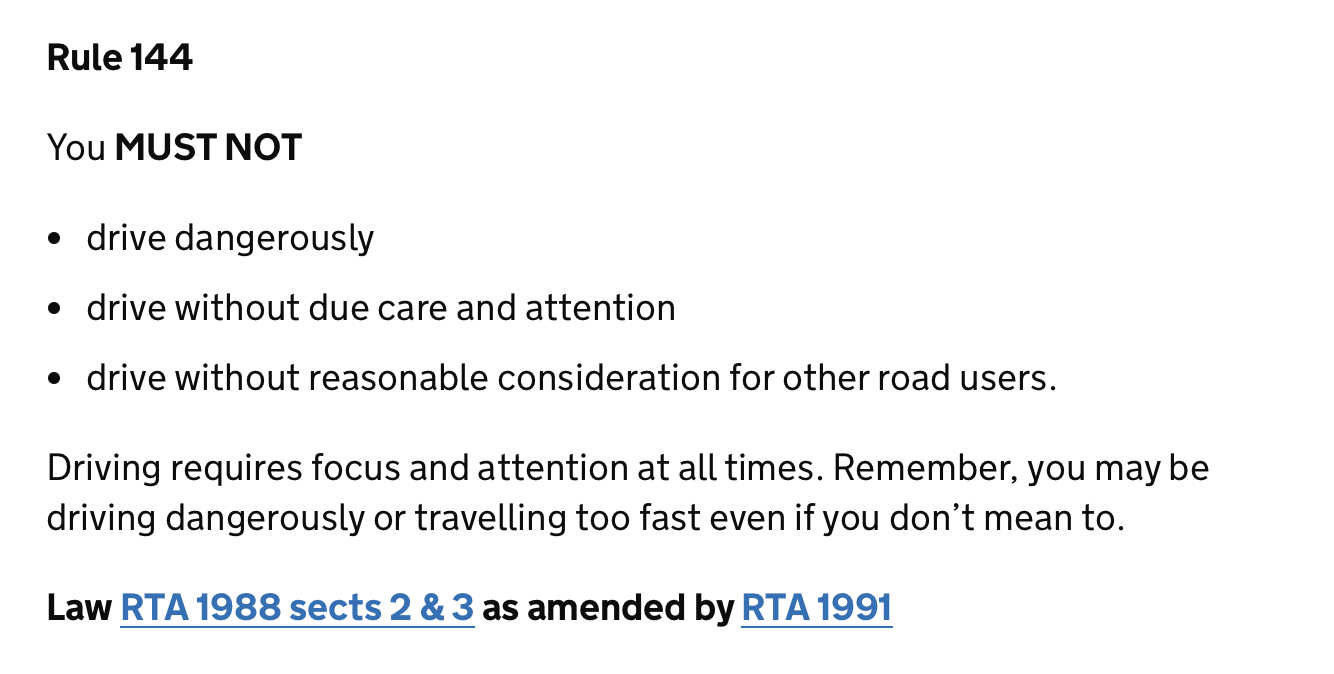
That’s most of the bits about overtaking, but there’s a catch all rule which also applies, and it’s this rule, and the supporting law (Section 3 of the Road Traffic Act 1988) that is applied when a driver performs a close pass and it ends up at the Magistrates’ Court. Rule 144:
Looking on the Crown Prosecution website for careless driving one of the examples given is ‘driving too close to another vehicle’.
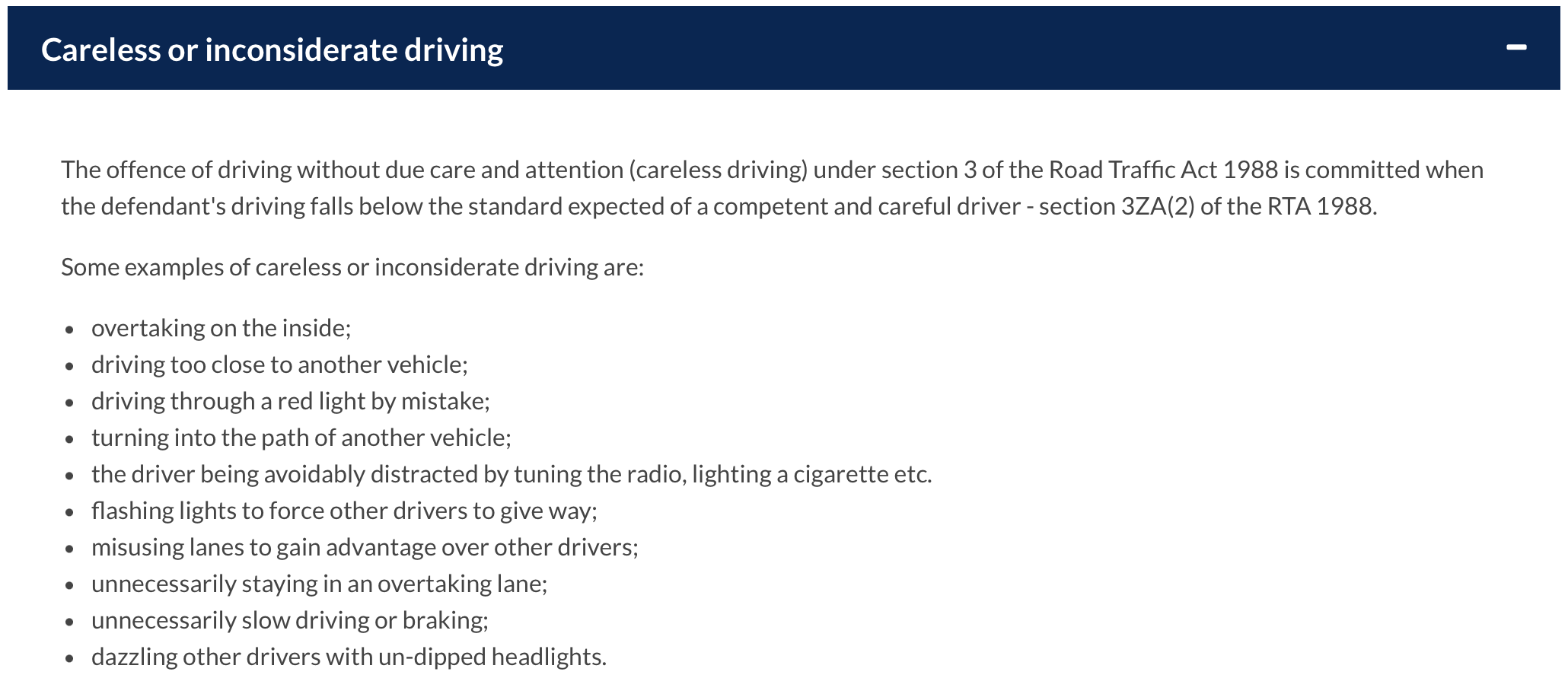
Finally there’s also some interesting information on the Sentencing Council guidelines here, notably one of the aggravating factors: ‘Offence committed in the vicinity of vulnerable road users, including pedestrians, cyclists, horse riders, motorcyclists’
In summary, if you’re overtaking someone riding a bike make sure there’s no oncoming traffic, don’t overtake approaching a junction, a crossing, the brow of hill or a bend, and leave plenty of space; at least 1.50m. If you’re not sure how far this, it’s about the width of your car, and a good overtake is you pass the cyclist with your entire vehicle over the central white line. There’s some examples of Most Excellent Overtakes (MEOs) below.
Now if you don’t do this there’s a reasonable chance the person riding the bike will have felt a little uncomfortable with the proximity of the metal box on wheels you’re in control of with their body balancing on two wheels and notably not in a metal box. Of course if you were really close it may leave them upset and shaken, and considering whether they should ever ride a bike on the road again.
Given the number of people now using cameras whilst riding (and using motor vehicles) there’s a growing chance your driving will have been recorded, and if they are so inclined, have time, and your local police force takes the submission of video as evidence showing antisocial, dangerous and illegal driving seriously, you may receive a letter; a warning, or a Notice of Intended Prosecution. You may get the option to attend an education course, or take 3 points and a fine, or you may be asked to attend the Magistrates Court, defending a charge of Driving without Due Care and Attention.
Penalties and consequences of offending are also defined in the Highway Code in Annex 5, with the maximum fine / points for driving without due care and attention (careless and inconsiderate driving) shown below:

Overtaking a cyclist on a road with a solid white line
I think it’s fair to say it’s common knowledge for us drivers that we shouldn’t overtake another car if there’s a solid white line on our side in the middle of the road. But what about if we’re approaching someone riding a bike from behind?
So, it’s dependent on how fast the person riding the bike is travelling (who’d have thunk it?); if they’re travelling less than 10 mph (16 km/h) you’re good to go; if they’re travelling faster than that you’re breaking Section 36 of the Road Traffic Act 1988.
I just checked my average speed on my commute to work by bike on Friday. According to Strava I averaged 21.9 km/h, which includes an elevation gain of 34 m (so not down hill). Now I strive to put so little effort in that I don’t break a sweat (Strava says this was a comfortable endurance effort). Why do I mention this? I think it’s fair to say if you’re overtaking someone on a bike with solid white lines and the road is flat or downhill it’s reasonable to assume they’re travelling faster than 10 mph, and therefore you’re breaking the law.
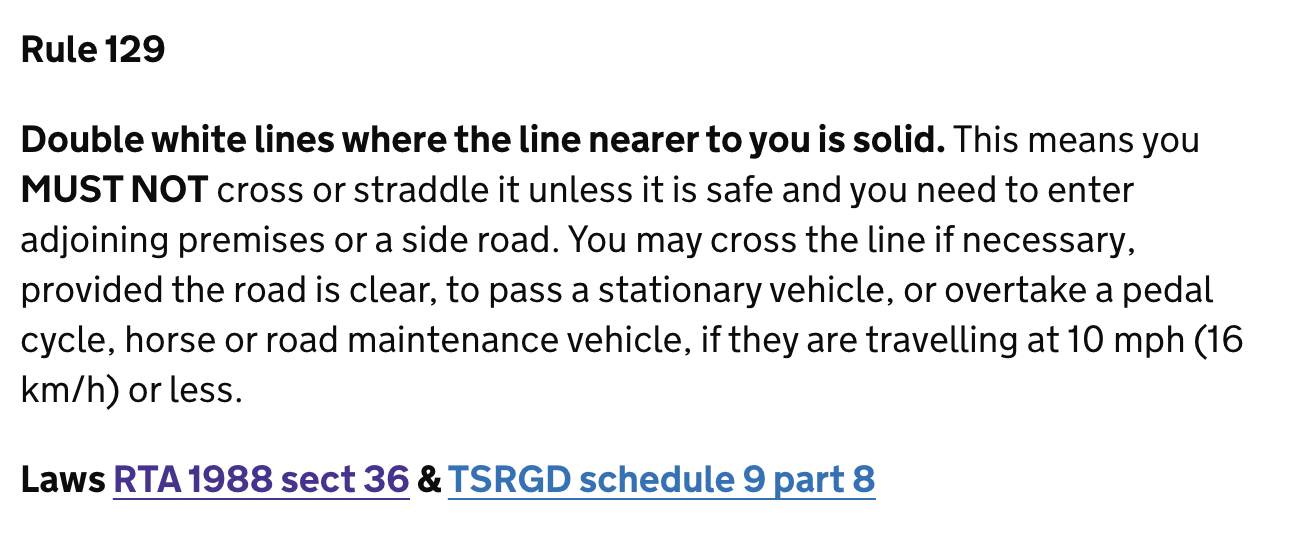
So there you go, that’s my understanding of what the Highway Code states, backed up by UK legislation, about overtaking someone riding a bike when one is driving a car.
And lets be clear (and despite what you might read on popular social media platforms), if reported you absolutely can be on the receiving end of a letter from the police; it may be an advice / warning letter, or it may be a Notice of Intended Prosecution. If it’s the latter, you’re likely to have a choice of an education course, or points on your license and a fine. Alternatively you can chose to take the case to the Magistrates’ Court, where the Magistrates will take a view on whether your driving was below the standard expected of a competent driver.