What does the Highway Code say about riding a bike?
If you’ve been watching closely you’ll notice this is Part III of my trilogy of blogs feature excerpts from the Highway Code (Part I and Part II are here; some say this might rival the Godfather Trilogy, others Peter Jackson’s The Lord of Rings), and it’s time to focus on what we’re obliged / advised to do when riding a bicycle, with the aim of ensuring the riders safety, and the safety of other road users. The Highway Code has lots to say applicable to people riding bikes, so I’m going to cherry pick the interesting bits, and suggest for further reading to look up Cycling in the handy Highway Code Index.
Anyway, lets dive in.
I’m going to start with Rule 72 - Road Positioning.
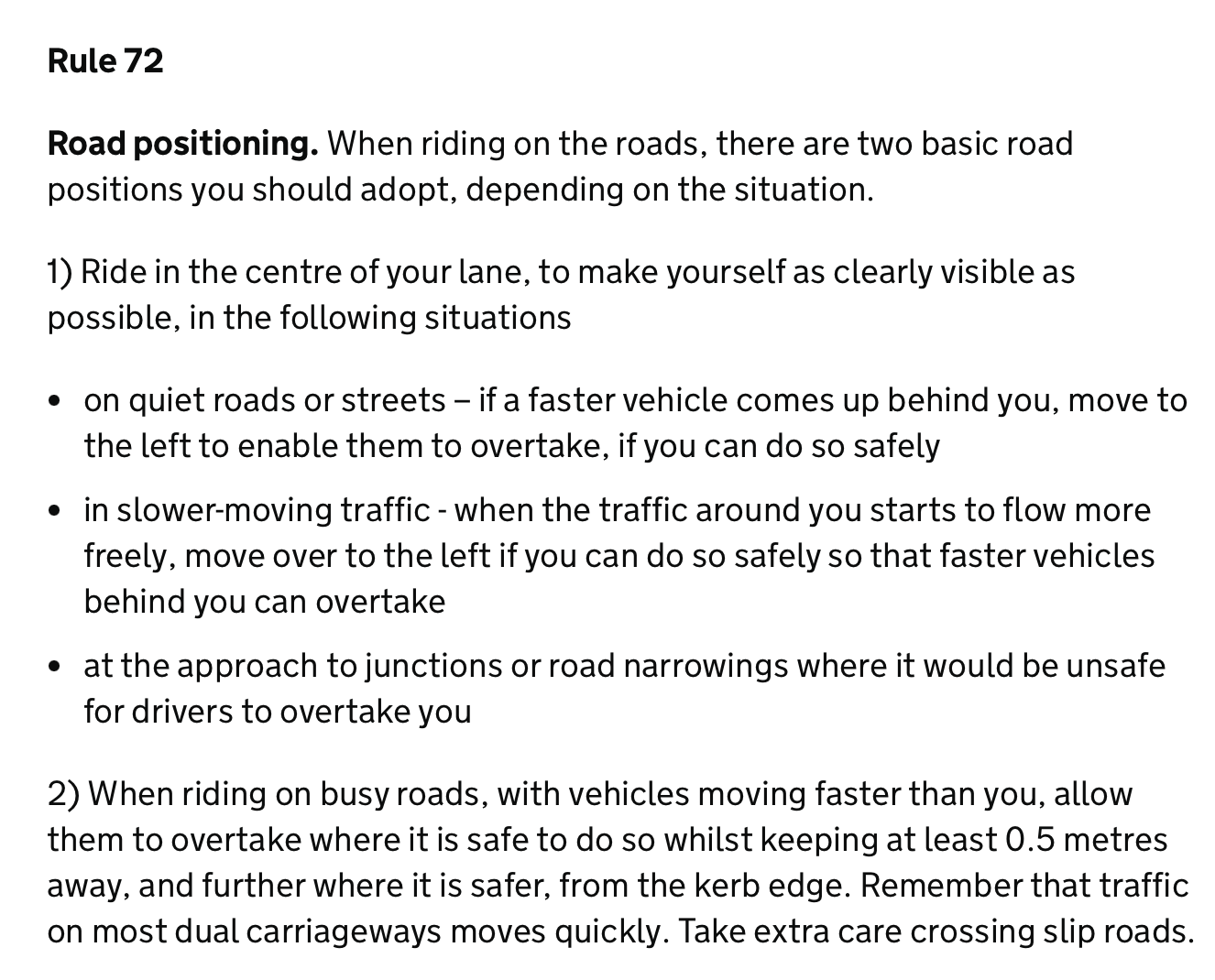
So for everyone out there having a good old moan about people cycling in the middle of the road (I suspect they mean the middle of the lane), the Highway Code explicitly advises people riding bikes to do this in certain circumstances, which will occur regularly when cycling in an urban environment, and even then to be no closer than 0.5m from the kerb (which puts you at risk of a regular bump over drainage gullies; I’m further out).
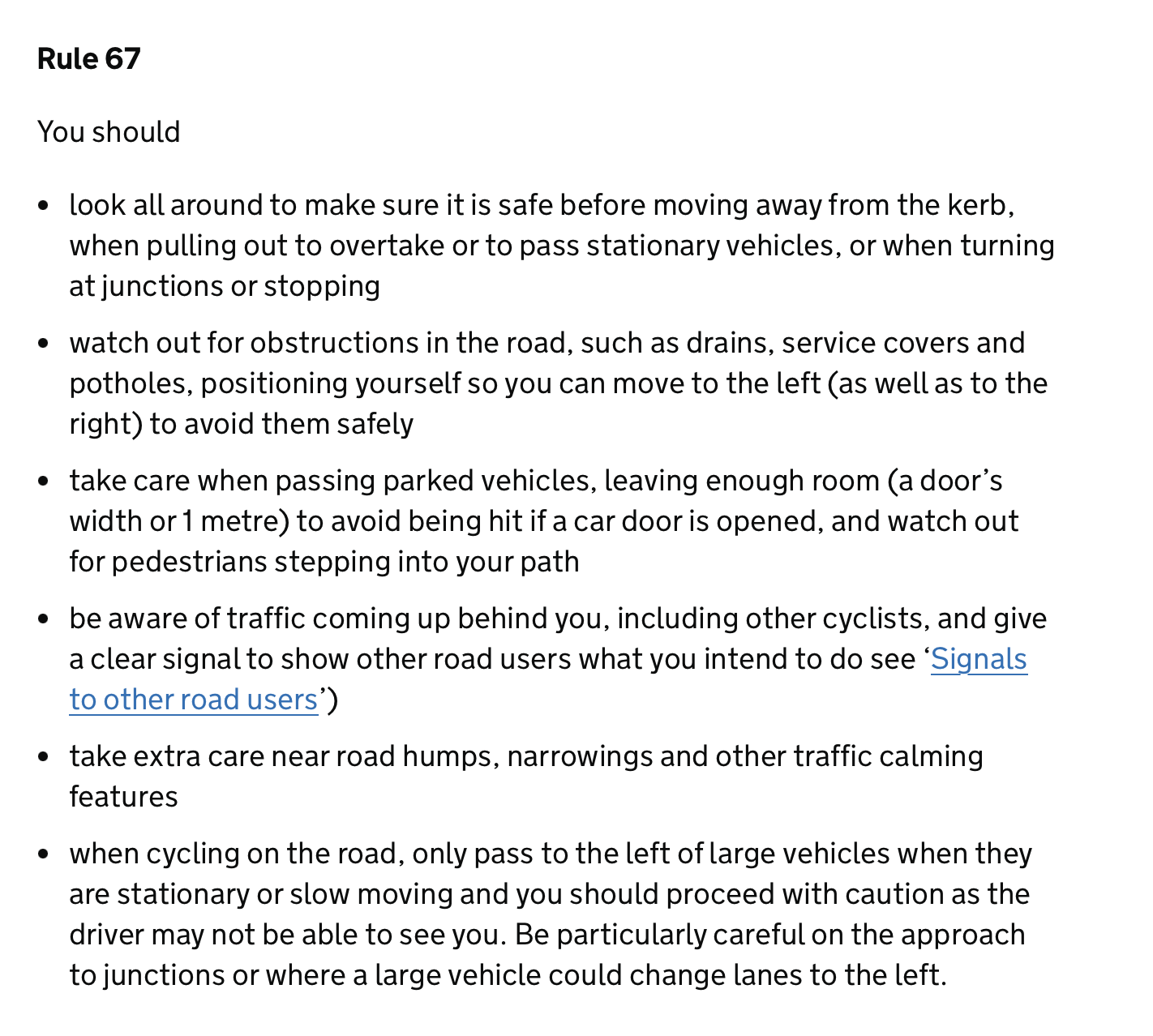
There’s then some more guidance about road positioning in Rule 67, which might explaining why someone riding a bike is meandering (avoiding drain covers or potholes), further out than expected when overtaking parked vehicles (avoiding getting doors), or passing slow moving or stationary vehicles on the left (described elsewhere in the Highway Code as filtering; see Rule 211).
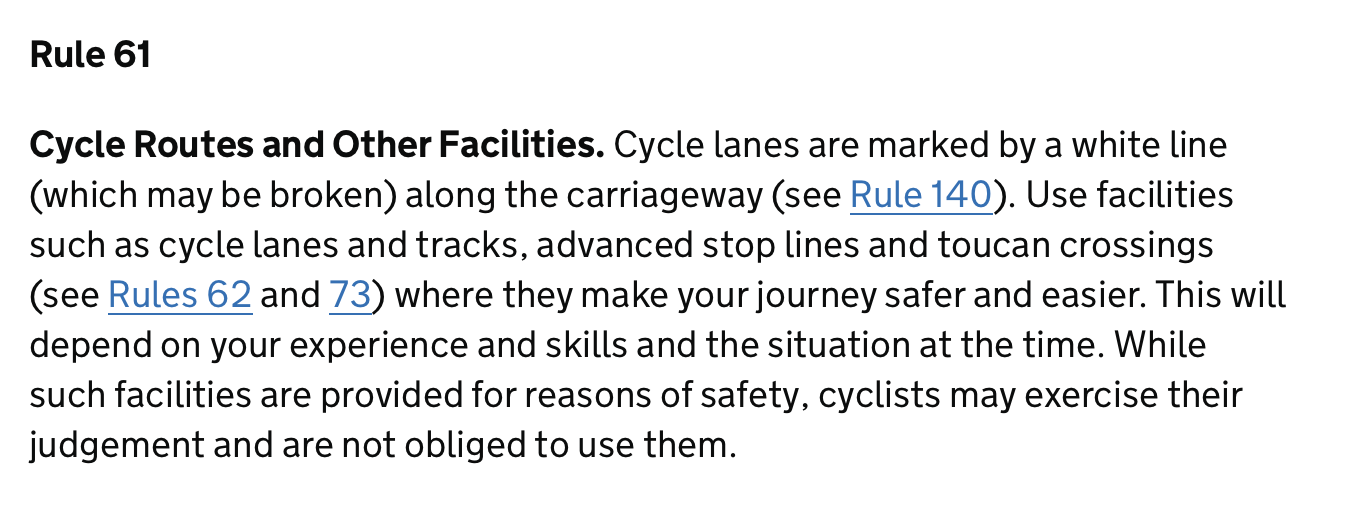
Another point which might surprise some drivers is featured in Rule 61 about cycle routes and other facilities, notably there are provided for reasons of safety, but folk riding bikes are not obliged to use them. You can read another Bike Worcester blog here which gives examples of infrastructure in Worcester, and why it might not be used.
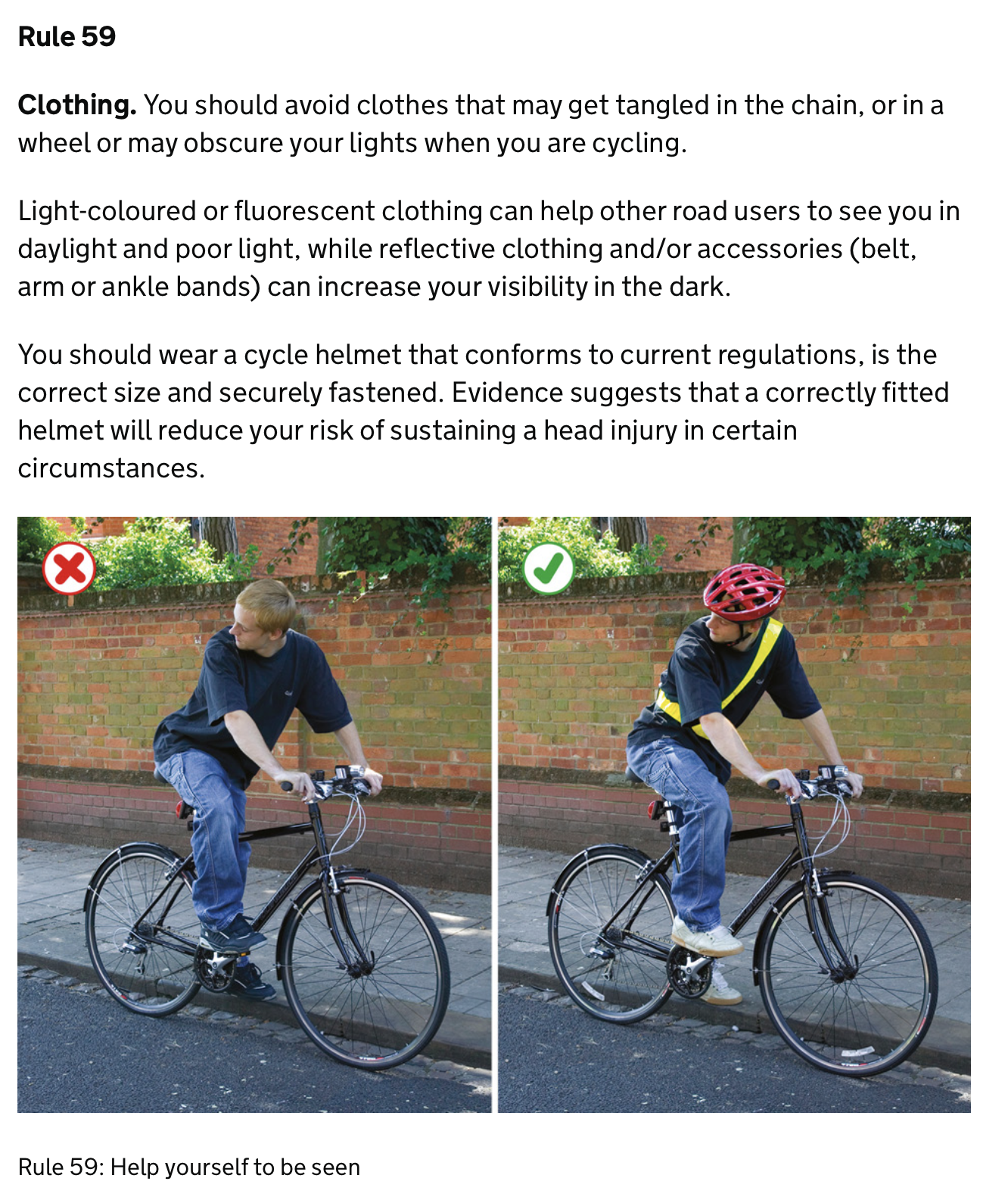
Right, lets move on to clothing; I bet there’s loads about wearing lycra; let me see….Rule 59.
I have to say it amuses me a little. The first sentence is a strong agree, and the second, well, sort of; it fails to mention a cycle jacket, which I’d usually be wearing at night summer or winter, most of which feature reflective areas. It seems to miss the obvious ‘wear something comfortable’ (which the rider seems to be doing), but hey ho. I’m happy enough with the helmet statement, particularly that it is not a guarantee of reducing head injuries. There’s another blog on Dan’s take on this here.
My favourite bit is that the fella in the picture took the time to change into white trainers, but stuck with the black T-shirt. I prefer a black trainer white T-shirt combo myself.
In reality there’s no excuse for drivers not seeing someone riding a bike on a road regardless of clothing during the day, and if you’re cycling with lights at night (a huge assumption the the headlights are working on the car). If you attend a Bike Worcester organised Bikeability session you might have the pleasure of meeting our Martin, who’ll suggest, given a choice, of wearing something bright and lively. But that might just be his outlook on life.
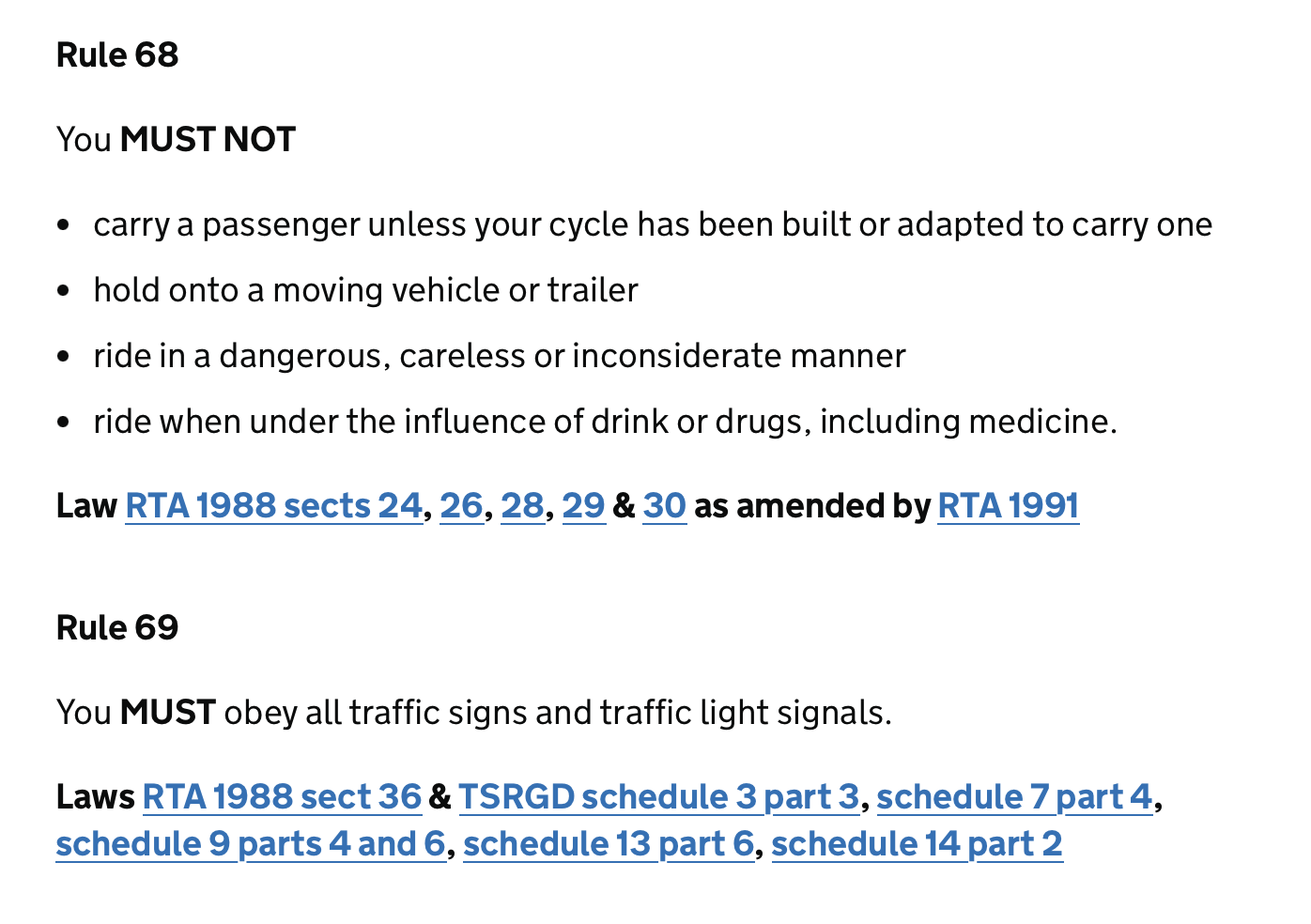
I’ll finish quickly with some of the musts and must nots in Rule 68 and 69. All pretty sensible, and for the folk who’ll bang on about cyclists jumping red lights; despite your observations we don't all do it, and so do some drivers. Oh, and there’s a fair few traffic lights that don’t recognise the presence of a bike, and so on occasion it may be their only option. My advice if you really can’t wait? Get off and walk through the light, then get back on. Perfectly legal.
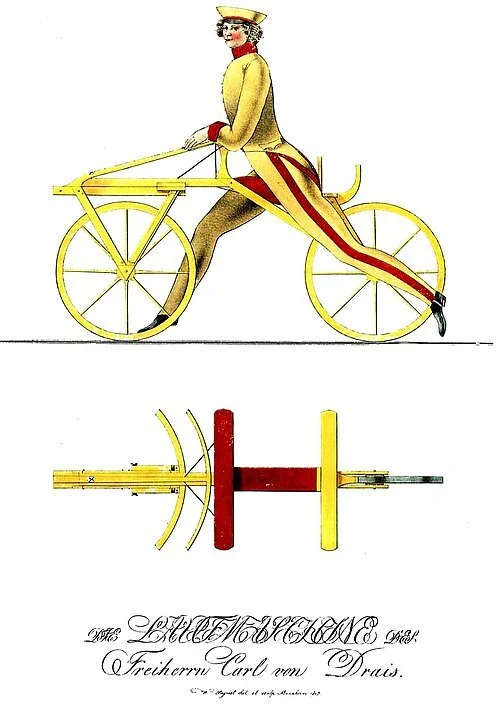
Finally we need to deal with Rule 64, the one about cycling on a pavement, as detailed in the Highways Act of 1835 Section 72. I find it fascinating that we still reference ancient laws in modern society, a quirk of our legal system and democratic systems I guess. To put it in context, the law was passed about 25 years before pedals were added to a Dandy Horse, Draisine or Velocipede (a rather lovely adult balance bike), and 50 years before cars were invented. The law also prohibits the leading, driving or tethering of any horse, ass, sheep, mule, swine or cattle, or carriage, truck or sledge by the side of any road made or set apart for the use or accommodation of foot passengers. If you do you have to pay any sum not exceeding Level 2 on the standard scale.
A bit more up to date, my understanding is that the latest comment on it by the National Police Chief’s Council is from 2014, and advises police use discretion. "Chief police officers, who are responsible for enforcement, acknowledge that many cyclists, particularly children and young people, are afraid to cycle on the road, sensitivity and careful use of police discretion is required."

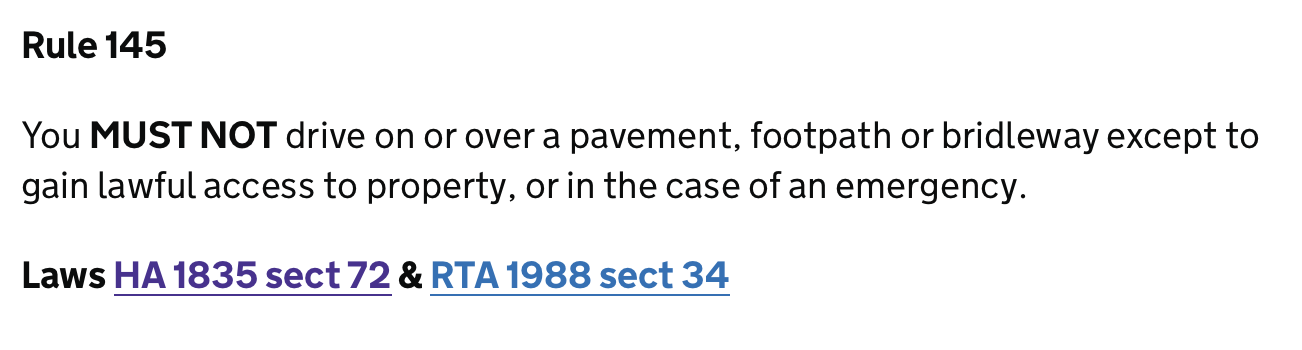
Oh, and if you sense a grumble on the horizon, you can always remind anyone who drives a car about Rule 145, which is the same but for cars, and strictly speaking applies to every bit of pavement parking you can lay your tyres on (it references the same law from 1835). I guess careful use of police discretion is required.
Final finally, Annex 1. You and your bicycle is a lovely section which offers some tips about your ability and bike selection, some basic maintenance, and essentials (brakes and front and rear lights at night). It also includes some advice about bike training, which incidentally Bike Worcester offer here.
Happy riding!